A Strange Necessity: Rebecca West, James Joyce & the artistic impulse
Why does Art matter? What is this strange necessity?
–Rebecca West
…the closer you try to approach the facts through history, the deeper you sink into fiction. The greater the care with which you explain a fact, the more nonsensical a fable you fish out of chaos. – Halldór Laxness, Under the Glacier
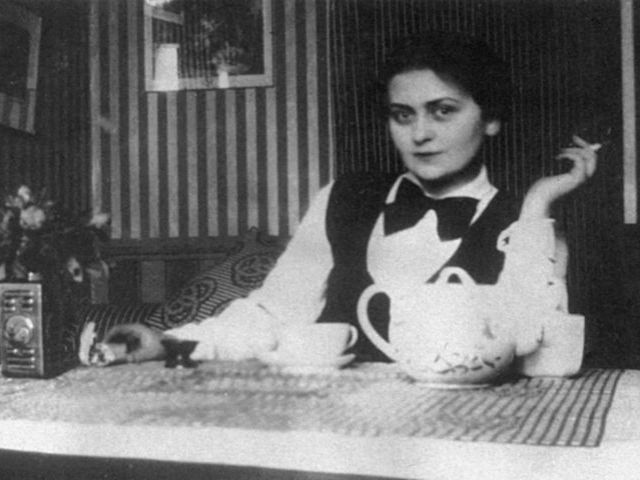
In her book-length essay The Strange Necessity, philosopher-writer Rebecca West observed how the creative act could be thought of as a completely holistic and natural force in the world. In the act of creating, the artist becomes a part of nature, fused and connected to the natural world. West’s metaphor of the natural artist is ; “determined and exclusive as the tree’s intention of becoming a tree, and by passing all his material through his imagination and there experiencing it, he achieves the same identity with what he makes as the growing tree does.”[i][1]
Strange Necessity claims the actions of an artist, in the process of creation, comes out of a biological necessity, an unstoppable urge bound up with natural primal desires. The artist is never in total control of the process of creating, but is only fulfilling a natural process bound up within life. The necessity that West explored can be simplified as the “spiritual impulse”, an intuitive connection and higher realm, beyond thought or emotion that resides in the creative act. West further identifies a fundamental unity between all art and experience. The creation of artwork is an engagement with life, a process that’s transcendent, connected with a spiritual purpose.
The Strange Necessity is a moving portrait on the motivations of an artist. In her concluding chapters, West shifts to the exaltation and spiritual function a work of art performs on the individual. It is a relationship to art that borders on the sexual: “I have…this crystalline concentration of glory, this deep and serene and intense emotion that I feel before the greatest works of art… It overflows the confines of the mind and becomes an important physical event…Is this exaltation the orgasm, as it were, of the artistic instinct, stimulated to its height by a work of art…”[ii] This spiritual and orgasmic manifestation of art is noted in the grandiose and sublime landscapes of Frederic Church and J.M.W. Turner, the floating abstraction of Kandinsky, in the mathematical genius of J.S. Bach and Mozart, or the poetry of Melville and Poe; all works that commune with the soul on a metaphysical landscape. This pull toward the spiritual, sublime and orgasmic was fundamental to the development of modernism. Inside Jazz, abstraction, visual art, poetry and fiction, were the release and attributes of a mind in exaltation of the orgasm.
West used the example of a single day of city life to investigate the novel as a creative act and the moving effect of art on her own life. An intensive study of Joyce’s Ulysses takes place inside a single day of West’s life within her home in the city of Paris. This doubling of art and life was itself at the very center of Ulysses, which also takes place in a single day in the life of James Joyce. This entwined process of art and life becomes like an image reflected in a hall of mirrors. Joyce never made public his notice of West’s criticism, however he wrote a scathing put-down of her and a parody of Strange Necessity within his novel Finnegan’s Wake. West takes the example of Joyce as a motivating pendulum in all the arts. The passage of a spiritual or natural transformation from one artist to the next often occurs between written and visual worlds. The simultaneous fractured time and cubism within Joyce is reflected in Picasso paintings, comic books, a Bach concerto and jazz riffs.
The way art is expressed through society, the way it’s supported, taught, encouraged and rejected, is often based on the timorous relationship between artist and patron and the political mechanics of the time. During times of wealth and industry (the Renaissance is the most obvious example), this relationship can be developed fruitfully and become a concentrated force.
The relationship of funding and material support in the arts is illustrated in Ezra Pound’s comment that, “Great art does not depend on the support of riches, but without such aid it will be individual, separate, and spasmodic: it will not group and become a great period… a great age is brought about only with the aid of wealth, because a great age means the deliberate fostering of genius, the gathering-in and grouping and encouragement of artists.”[iii] This careful balance and support of the arts is often shaken and disposed of in times of great social upheaval and despair, yet this “strange necessity” is present in all eras, and should be viewed as a constant interior force.
Forces of spirit or metaphysics which effect and drive the artist, is a theme often overlooked and diminished. From the nineteenth century “art reform” to contemporary theorists, metaphysical and spiritual influences continue to be downplayed or ignored. The opening of early nineteenth century America to its vast resources and its “manifest destiny” has been a clear source of our nation’s spiritual tensions and troubles. The drive onward instead of inward creates uneasiness and an emphasis on earthbound desires. Conditions of genocide, war, racial divisions and destruction of land and resources can only be reconciled or balanced by spiritual solutions or the transformation of consciousness –conditions that are universal in the art process.
West declared America itself as part of a political necessity; a country of belief and action balanced on a life or death situation. America evolved into existence because of the necessity for freedom, an idea constantly tested and often betrayed by many of America’s leaders. It was once believed that America was founded on and contained the seeds of spiritual freedom, and served as a beacon for other nations. That noble idea of spiritual freedom has gradually been replaced by a slide into greed and selfishness.
The idea of spirituality as unbounded space, without restraint, serves the arts and the areas in which art flourishes. New York City once came close in the 1930s and 40s as a site where the arts could flourish without boundaries. During the development of the ashcan and abstract expressionist schools modernism took root, at least a modernism outside of European influence. That heroic past has been documented closely and mythologized, yet, the story of cheap rents, artist garrets and a pioneering spirit is not exclusive and is one we return to again and again, in many sites around the globe.
* * * * * * *
postscript:
Beauty in things exists merely in the mind which contemplates them. –David Hume, Essays Moral and Political, 1742
The Eighteenth century philosopher David Hume (1711-1776) remained unpopular and mostly unread until the mid-twentieth century. His idea on beauty was that it existed as fragmented perceptions in the mind. That the mysteries and beauty we seek in art are always “impressions of the mind” –the thoughts and feelings we carry within us through comparisons of experience. Hume said, “power and necessity… are… qualities of perceptions, not of objects… felt by the soul and not perceived externally in bodies”[iv] That fragmented-self idea was later embraced and radicalized by Gilles Deluze and the poststructuralists. We are all parts of a greater whole and the process of art is nothing less then the universe being itself and seeing itself.
The eternal return is woven through the fragmented-mind and its removal of the object of our passion. The artist is on a feedback loop where art and the mind are always one.
[i] Rebecca West, The Strange Necessity (Doubleday, New York, 1928) p.7
Rock Legend Mitch Ryder signing at Book Beat on Sunday, Feb. 5th
Mitch Ryder, the legendary “unsung hero” of Michigan rock and roll will be presenting and signing his new autobiography Devils & Blue Dresses: My Wild Ride as a Rock and Roll Legend,at the Book Beat bookstore on Sunday, February 5th between 12:30 -2:30 PM. This is a rare opportunity to meet and hear Ryder speak in a small and intimate setting. The Book Beat islocated at 26010 Greenfield in Oak Park. This event is free and open to the general public. To reserve an autographed copy of Devils & Blue Dresses, you can order online now or call (248) 968-1190 Music by Mitch Ryder will be available next door from our neighbors at Street Corner Music.
Mitch Ryder’s autobiography goes well beyond typical eyewitness accounts of sex, drugs and rock n’ roll road stories. His account of rock stardom is one of the most lucid, original, darkly emotional and surreal in rock and roll. In 34 concise chapters, Ryder has penned a passionate and often experimental exposè, told in a distinctly introspective voice, a ‘long nights journey’ through the twisted alleyways of the music business and how his natural talent and notoriety was used and abused by himself and those around him.
Detroit Author Paul Clemens will be at the Baldwin Public Library on February 1, 2012 at 7:00 pm speaking about his newest book, Punching Out: One Year in a Closing Auto Plant. This is Clemens’ second book on Detroit, his first being Made in Detroit and it concerns the loss of manufacturing and the working class in Detroit and America.
From the New York Times, “All this said, “Punching Out” is frequently rewarding. Mr. Clemens traces the colorful history of the Budd plant, which manufactured parts for a variety of car brands and which once employed nearly 10,000 people. He is a lovely, mournful observer of Detroit’s people.”
Rock Legend Mitch Ryder signing at Book Beat on Sunday, Feb. 5th
Mitch Ryder, the legendary “unsung hero” of Michigan rock and roll will be presenting and signing his new autobiography Devils & Blue Dresses: My Wild Ride as a Rock and Roll Legend,at the Book Beat bookstore on Sunday, February 5th between 12:30 -2:30 PM. This is a rare opportunity to meet and hear Ryder speak about his life in a small and intimate setting. The Book Beat islocated at 26010 Greenfield in Oak Park. This event is free and open to the general public. To reserve an autographed copy of Devils & Blue Dresses, you can order online or call (248) 968-1190 for more information.
Mitch Ryder’s autobiography goes well beyond typical eyewitness accounts of sex, drugs and rock n’ roll road stories. His account of rock stardom is one of the most lucid, original, darkly emotional and surreal in rock and roll. In 34 concise chapters, Ryder has penned a passionate and often experimental exposè, told in a distinctly introspective voice, a ‘long nights journey’ through the twisted alleyways of the music business and how his natural talent and notoriety was used and abused by himself and those around him.
Coming on February 29th: Elmore Leonard Book Signing for Raylan at the Grosse Pointe War Memorial… details TBA
* * * * *
Book Beat reading group selection for February
The Book Beat Reading Group will meet February 29th on leap year to discuss The Museum or Eterna’s Novel (The First Good Novel) - a book ahead of its time. Written during the 1930s and ’40s – the heyday of Argentine literary culture – Museum is in many ways an “anti-novel: It opens with more than fifty prologues – including ones addressed “To My Authorial Persona,” “To the Critics,” and “To Readers Who Will Perish If They Don’t Know What the Novel Is About” – that are by turns philosophical, outrageous, ponderous, and cryptic. The second half of the book is the novel itself, a story about a group of characters (some borrowed from other texts) who live on an estancia called “La Novelo”. Meetings are held at the Goldfish Teahouse (117 W. Fourth, in downtown Royal Oak) at 7pm. Books are discounted 15% at Book Beat (26010 Greenfield Rd., Oak Park, MI). All are welcome!
Wong Herbert Yee at Bloomfield Township Library, Jan. 25th
Wednesday, January 25th beginning at 6:30 PMWong Herbert Yee, the Theodor Geisel Honor Award winner, will be demonstrating his process for writing and illustrating books. You don’t want to miss his dynamic presentation! The Picture Book: From Concept to Creation will take place at the Bloomfield Township Public Library 1099 Lone Pine Road. The Book Beat will be supplying books for the event. Please contact the Bloomfield Township Library (248) 642-5800 or the Book Beat (248) 968-1190 for more information.
About The Author: “I was born in Detroit, Michigan, one of seven. My first grade teacher tacked a drawing of mine, Horse with Feedbag up on the bulletin board. From there I went on to study art at Wayne State University, graduating in 1975 with a BFA in printmaking. I had my fair share of rejections at the start, but through perseverance my first picture book, EEK! There’s a Mouse in the House was published by Houghton Mifflin in 1992. My latest early reader, Mouse and Mole Fine Feathered Friends received a 2010 Theodor Seuss Geisel Honor Award.” -from the author’s blog site.
Mitch Ryder, the legendary “unsung hero” of Michigan rock and roll will be presenting and signing his new autobiography Devils & Blue Dresses: My Wild Ride as a Rock and Roll Legend,at the Book Beat bookstore on Sunday, February 5th between 12:30 -2:30 PM. This is a rare opportunity to meet and hear Ryder speak up close in a small and intimate setting. The Book Beat islocated at 26010 Greenfield in Oak Park. This event is free and open to the general public. To reserve an autographed copy of Devils & Blue Dresses, you can order online HERE or call (248) 968-1190 for more information.
* * * * * Devils & Blue Dresses, a review
Mitch Ryder’s autobiography goes well beyond typical eyewitness accounts of sex, drugs and rock n’ roll road stories. His account of rock stardom is one of the most lucid, original, darkly emotional and surreal in rock and roll. In 34 concise chapters, Ryder has penned a passionate and often experimental exposè, told in a distinctly introspective voice, a ‘long nights journey’ through the twisted alleyways of the music business and how his natural talent and notoriety was used and abused by himself and those around him. Readers take caution, this is not a light bedtime story.
Devils & Blue Dresses is an emotionally searing autobiography where Ryder opens his heart and confronts his past with deadly aim. It’s a well-written memoir on music-politics, the weight of fame and identity, and its attendant web of prizes and perils. The book highlights many tragic-comic episodes both high and low; starting with impoverished scenes of childhood, a dysfunctional home-life and Ryder’s early manipulation and naivety inside the commercial hit-making machine. A string of exceptional high moments sparkle throughout the book; witnessing Bob Dylan’s recording of Highway 61, jamming with Jimi Hendrix (who asked Ryder to be his singer), partying with The Beatles at a countryside LSD retreat after their celebratory release of Sargent Peppers and Hollywood screen tests with Sam Peckinpah and others.
Gifted with one of the greatest voices in rock and blue-eyed-soul history, the teenage Ryder was taken under the wing of producer/manager Bob Crewe, an early 60s hit-single Svengali known for his Four Seasons smash hits; “Big Girls Don’t Cry”, “Walk Like a Man”, “Sherry” and Frankie Valli’s “Can’t Take My Eye’s Off You”. Crewe would indoctrinate Ryder through strange scenes of stardom decadence while ensconced at his posh Dakota apartment in New York City.
Ryder’s first top-ten hit was the Crewe produced wonder “Jenny Take a Ride” –a rocket of a single that skillfully combined Little Richard’s “C.C. Rider” with “Jenny Jenny” –a classic showcase for Ryder’s high-energy solid gold vocal style. That talent/producer relationship was dramatically revealed by Ryder who said, “Mr. Crewe held all the cards… all of the music appeared on his record labels, or was licensed out, and he held management, recording and publishing contracts… As long as the hit records kept coming, I was safe from the ill will of an industry that, by nature, was insensitive and exploitative and whose executives were, for the most part, angry and bitter at having to suffer the childish abuse of so many of their client victims.” Ryder himself a ‘client victim’ lost most of his royalties and was bound to medieval contracts that froze his assets. Finally he was forced to beg for a $15,000 down payment on his Southfield, Michigan home –and that became one of the last royalty payments Ryder ever received. His love for music and contempt for the industry is burned deep onto every page.
Ryder’s story is a roller-coaster of comebacks, failures, marriages, infidelities, depressions, suicide attempts, career mistakes and close calls. His association with Barry Kramer at Creem Magazine and manager John Sinclair (of MC5 fame) culminated in a heady lost year, but his reformation of the band Detroit produced his 1971 release Detroit, a blistering rock LP that featured the Lou Reed / Velvet Underground single “Rock ‘N’ Roll” -one of Ryder’s last hits and a version Lou Reed declared to be definitive.
The book is filled with first hand documents; recording contracts, publicity shots, family photographs and deeply personal poetic side-bar sections titled, “a window to my soul” – italicized journal entries that convey Ryder’s inner thoughts on Southern Antisemitism, Holocaust museums, the feminist movement, “the dysfunctional existence we call American culture”, and his evaluation of poverty, freedom and democracy. Near the book’s end is a twelve page break-up letter and biting personal assessment from his wife Megan, followed by a glossary (Appendix A) that posts an A-Z listing of the artists Ryder met and his recollections of them, some include; Chubby Checker: I wish I knew how to turn a penny into a dollar like he does.Dave Clark Five:The Riveras and I took care of them before we ever had a hit. Janis Joplin:we talked about how tired we both were… we looked like two penniless vagrants … it was a surreal scene. Little Richard: It was his voice that taught me about energy.Jackie Wilson:…there was Jackie nude on a bed with a nude woman and we conversed for maybe fifteen minutes. Appendix B is Ryder’s outspoken geographic impressions from Canada to Switzerland. Appendix C is a complete discography of singles and albums and Appendix D, “An Essay from Mitch” is a last poetic stream-of-consciousness rage, a Heart of Darkness decent into an empty and bleak apocalypse. A sense of betrayal, anger and vitriol is aimed both at himself, the marketplace and his critics he calls “a pack of vengeful hyenas” – yet through all the pain and rejection there remains the rock steady soul of a Detroit survivor, unafraid to face himself and his demons head-on.
All the loose threads and surreal juxtapositions give the book a down-home slightly dizzy feel where Ryder may in fact be forging new directions in prose. Sincere and courageous to the nth degree and constructed seemingly without editorial direction, his book is one of the most self-analytic, raw and beautiful memoirs in the history of rock and roll. It’s purity comes from the fact he did this completely himself and its uncertain how his fans will receive this type of a creative autobiography, but one thing undeniable is that Ryder has laid out the naked truth for all to see and he remains a verifiable Detroit and national treasure.
* * * * *
Ryder’s book will also accompany a new album, The Promise, his first release in over three decades. Produced by another Detroit legend Don Was, the disc’s dozen tracks feature eleven originals plus a live cover for the Motown classic “What Becomes of the Brokenhearted.” Copies of the new CD will be made available during the signing from our next door neighbors at Street Corner Music. We appreciate your support of this event, for more information please call: (248)-968-1190
Book Beat’s Reading Group Selection for January is Sigizmund Krzhizhanovsky’s surreal The Letter Killers Club. The Reading Group will meet on Wednesday, January 25th in the Goldfish Teahouse (117 W. Fourth, in downtown Royal Oak) at 7pm. Books are discounted 15% at Book Beat (26010 Greenfield Rd., Oak Park, MI).All are welcome!
Set in an ominous 1920’s Russia, The Letter Killers Club is a secret society of self-described “conceivers” who, to preserve the purity of their conceptions, will commit nothing to paper. The logic of the club is strict and uncompromising. Every Saturday, members meet in a firelit room filled with empty black bookshelves where they strive to top one another by developing ever unlikelier, ever more perfect conceptions. The members of the club are strangely mistrustful of one another, while all are under the spell of its despotic President, and there is no telling, in the end, just how lethal the purely conceptual—or, for that matter, letters—may be.
“SK’s The Letter Killers Club is a monumental literary discovery, a gem buried in the Soviet Archives and only unearthed in 1976. With its daring experimentalism and acid commentary on state power, the book still stands as a work of revolutionary power.” –full review from The Driftless Area Review
“I am interested not in the arithmetic, but in the algebra of life.”-Sigizmund Krzhizhanovsky
One of the best foreign translations of the year comes naturally again from the New York Review of Books.The Letter Killers Club will be our second book discussion on SK since his brilliant Memories of the Future short story collection.
“A Russian writer whose morbidly satiric imagination forms the wild (missing) link between the futuristic dream tales of Edgar Allan Poe and the postwar scientific nightmares of Stanislaw Lem… an impish master of the fatalistically fantastic.”
—Bill Marx, The World
Sigizmund Krzhizhanovky was the Ukranian-born son of Polish emmigrants. In 1920, he began lecturing in Kiev on theater and music. The lectures continued in Moscow, where he moved in 1922, by then well known in literary circles. While clerking for an attorney Krzhizhanovsky began writing, and would do so steadily for close to two decades. His philosophical and phantasmagorical fictions ignored injunctions to portray the Soviet state in a positive light. Three separate efforts to print collections were quashed by the censors, a fourth by World War II. He died in 1950, largely unpublished in his native country. Not until 1989 could his work begin to be published.