
Nightcrawlerz & The Armory Show
by Cary Loren
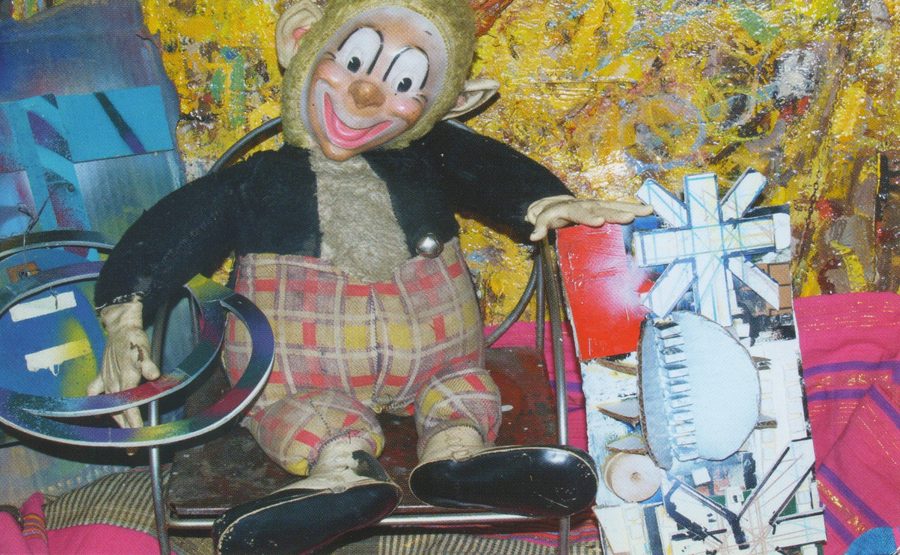
Cary Loren: Postcard announcement for The Armory Show, The central doll and chair were chosen from objects in Cay Bahnmiller’s studio. The sculpture on the left is by Barry Roth. The sculpture on the right is by Gordon Newton. Background painting by Bahnmiller.
On January 2, 2006, Book Beat opened The Armory Show: A Group Exhibition, without an opening reception. That same year, MOCAD opened its doors in the repurposed shell of an auto dealership. The Book Beat exhibition was a playful nod to the infamous 1913 New York City exhibition of nearly 300 artists, associated here with the arrival of modernism, Cubism, and Dada in the United States. At Book Beat, five Detroit artists—Bill Rauhauser, Gordon Newton, Cay Bahnmiller, Barry Roth, and Cary Loren—bridged constructivism, assemblage, and collage into a connective map of Detroit art. Roth and Loren exhibited together as the Nightcrawlerz collective.
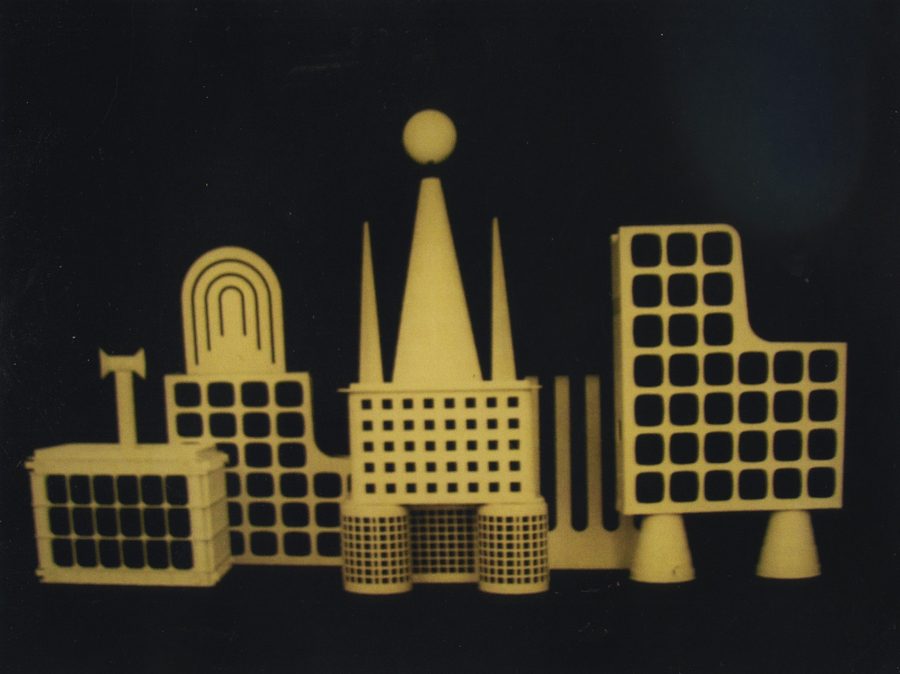
Bill Rauhauser: Temples and Tombs series, late 1970s, from the catalog Nightcrawlerz #23
Artists and the City
Bill Rauhauser first displayed his Temples and Tombs photo series in the 1970s at Pierce Street Gallery in Birmingham, Michigan. The series followed his conceptual fine artwork in the Object Series. Using common materials from hardware stores and found junk from around his house, Rauhauser created models of an architectural fantasy—a utopian city of high-contrast monuments and cityscapes. He painted the materials white, assembling his strange buildings on a tabletop in his basement, and photographed them against a black background.
The stark high-contrast objects and flat lighting made the images appear futuristic. Rauhauser, who taught photo-history classes at CCS, was an influential figure for many Detroit-area photographers. His best-known work emphasized the contemporary straight image, and was firmly centered in street photography. His surreal tabletop work was nearly unknown—and exhibited only once at a small gallery. Rauhauser’s imaginative
work gave the exhibition an architectural framework, connecting with the other artists through shared ideas of urban form, experiment, and regional identity.
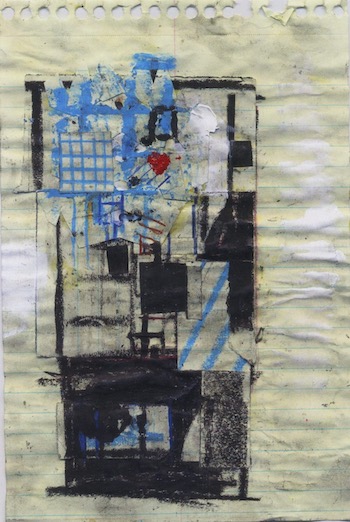
Gordon Newton: Untitled Drawing, The Old Church Window series, 2005, from the catalog: Nightcrawlerz #23
Gordon Newton was a leading sculptor and assemblage artist at the center of the Cass Corridor arts movement—a bricoleur who creatively sought out new ideas and worked a variety of techniques into his practice. The Old Church Window (Kirkstall Abbey) series contained small paintings on single pages taken from a stenographer’s notebook. He worked with enamel, oil sticks, and crayon into a mass of shiny black with small squares of blue and many had a red heart near the center. They seemed like silhouettes of a city at night, mysterious maps of urban landscapes or aerial blueprints—projections from above. Newton commented that they were based on a ruined 11th century church in England he had read about but never saw. Newton was a voracious reader of fiction, especially suspense thrillers from England, and the paintings might also be connected to a fictional world.
Contrasting the dark paintings was another series by Newton titled Snowflakes in Pisces Moonlight. These were small, layered sculptures made from foam core and cardboard, cut into star and snowflake shapes, painted, and hot-glued into ladders and ovals. He explained the ladder motif as his way to climb into Bahnmiller’s heart—and spoke of the works in sexual terms. Like his earlier glass diving-board series, these were mysterious creations of Newtonian physics. His Snowflake sculptures could also be read as sexualized clockworks. Newton encased each sculpture in a handmade Plexiglas box, sealing its contents. The reference to Marcel Duchamp’s Large Glass was hard to miss.
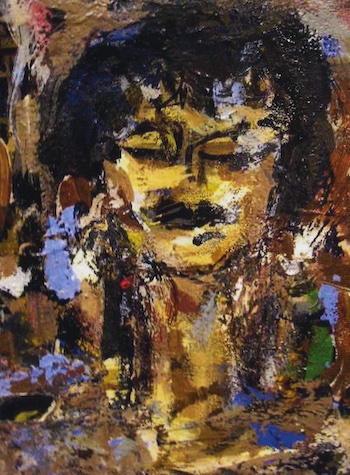
Cay Bahnmiller: Untitled Self Portrait, late 1990s
In 2003, Cay Bahnmiller was featured in a sprawling solo retrospective at Susanne Hilberry Gallery in Ferndale. Her works filled the space. Many of her collages were landscapes of the city, composed of found urban objects. One table held hundreds of painted cards and small books, each thick with paint and short literary quotations or poems painted or pasted on one side. These index-card-sized pantings were a unique peak inside the artists’ mind.
Some of the works from Hilberry were displayed again in The Armory Show. One small wooden sculpture included a hidden knife—an allusion to a violent rape Bahnmiller experienced in the early 1990s. Above the knife was a painted odalisque. Early in the show, after I bought the work, she demanded it be returned so she could “finish” the work. When the work came back to the gallery Bahnmiller had smeared out the nude figure.
A large masterwork begun soon after her rape, Der Imker (The Beekeeper) was purchased by the Detroit Institute of Arts, made possible by a large donation from Gil Silverman. Dozens of objects and clues to her life in Detroit, her literary interests, and the focus and drive of a creative and obsessive artist are literally embedded throughout Der Imker.
There was an elegant chaos to Bahnmiller’s work, and I decided to choose an object from her studio to photograph for the gallery announcement. I picked out a small furry stuffed creature that seemed half ape-like and clownish. The doll sat on a small modernist chair, also from Bahnmiller’s studio. One of its plump rubber-gloved hands rested on a spray-painted sculpture by Roth, and the other was on top of Newton’s Snowflake sculpture. A large golden canvas by Bahnmiller became the backdrop.
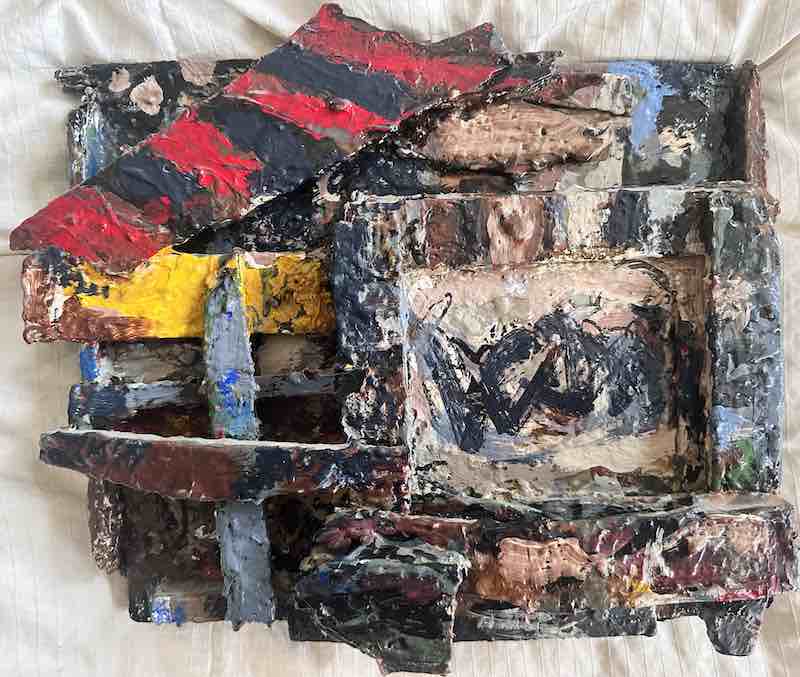
Cay Bahnmiller: Untitled Sculpture with Odalisque circa 1990s/ 2003
Roth created a show catalog titled Nightcrawlerz23, which was also a website that archived the work from the gallery and more. A poem by Roth was reprinted in the catalog, a manifesto titled “Beatniks of the New Century”:
We combine plots, a relentless pursuit glimmering of an earlier identity
“Little Wing” Through an invisible boundary of darkness escaping
patriotism, estranged and inappropriate.
In the early 1990s, Roth adopted the scanner as a tool to create art, using it as a view camera. This became part of the Nightcrawlerz practice—passing collaged and shared images onto the glass plate. This echoed back to the early fax technology and Xerox machine. This was a no-cost, nearly automatic process we used to break into reality. The scanner could represent three-dimensional qualities and scatter light in unpredictable and distorted ways. Experiments were made using different materials to see how the technology would respond. The scanner offered instantaneous feedback, similar to the era of Xeroxed collages.
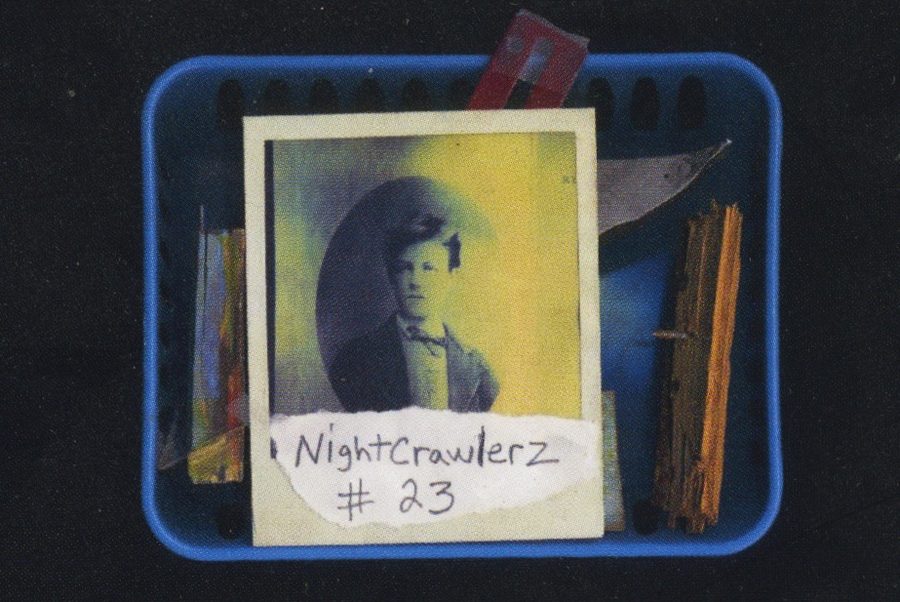
Barry Roth: Scanned image and catalog cover for Nightcrawlerz #23, 2005
The Armory Show featured several small sculptures by Roth, spray-painted cardboard, and small wooden-block collages painted in primary colors. His photos included enigmatic technological landscapes related to his “Rooster Tray” and Kabbalah series, framing photographs and objects inside developer trays—collages with a unique mystical iconography.
The exhibition showed how an architectural language was shared by the group. In Rauhauser and Newton’s work, the artwork formed maps, blueprints, and foundations—the skeleton, roots, and bones of urban life. For Bahnmiller and Nightcrawlerz, their works represented an outer layer of the city, the cultural refuse of the surface. The Nightcrawlerz scans, faxes, and zines broke down images, words, and the page, seeing them anew, and recording what Mallarmé discovered in Un coup de dés—a text of impressions and music, and a poetry of space and chance.
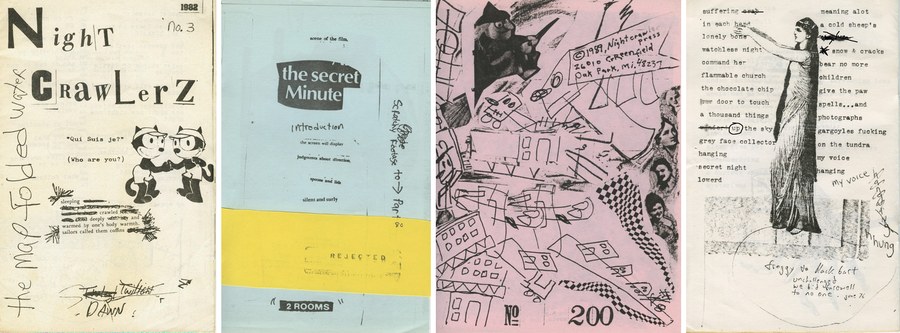
Nightcrawlerz: various pages from artist books published 1981-1985
A Short History of Nightcrawlerz
When Barry Roth was a professor of photography at Wayne State University in the late seventies, I met him there as a student. Our first collaboration began around 1981 when we briefly shared a rental house in Berkley, Michigan. The first Nightcrawlerz work began as recording experiments and quickly extended into zine making, poetry,sculpture, photo-scans, and music. In 1999 we issued a collection of music and poetry as Nightcrawlerz: The Third Mind 1981–1990, the name lifted from the Brion Gysin / William S. Burroughs collaboration The Third Mind, a book about cut-ups and theory which became a kind of reference manual for us.
The Armory Show was a chance to collaborate once again, to exhibit new scans and formalize a gathering within the frame of our local avant-garde.
In 2009, the Destroy All Monsters collective exhibited its archive as Hungry for Death, curated by James Hoff and myself—an exhibit that premiered at Printed Matter in New York City and toured overseas. The exhibition included rare sets of the Destroy All Monsters and Nightcrawlerz magazines, which were both purchased at Printed Matter by the Museum of Modern Art in New York.
By bringing these artists together, The Armory Show revealed a shared architectural language rooted in Detroit’s urban landscape. The conversation that follows returns to the experiments behind the exhibition—particularly Nightcrawlerz’s movement among photography, collage, sculpture, poetry, sound, and emerging technologies.
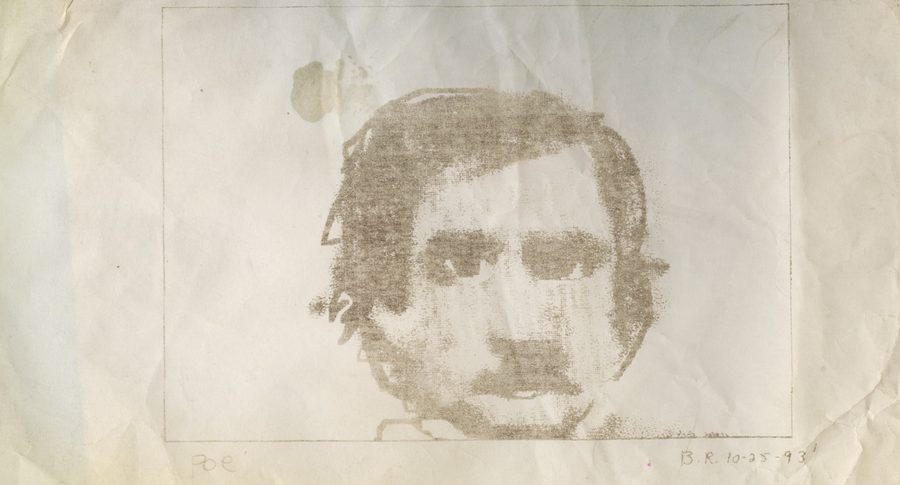
Barry Roth: Portrait of Poe, fax machine image sent from a toy computer program, Oct. 1993
Inside the Art of Nightcrawlerz
An edited conversation with Barry Roth and Cary Loren
On Photography and Finding a Way
BR: People loved Bill Rauhauser and he was this heavy influence. A teacher figure is powerful. He was also really invested in the role. But people didn’t know any better. They weren’t looking to anything beyond what was already there—and what Rauhauser showed them. I’m just saying that’s my truth and it’s not that popular.
CL: You had Carl Toth as a teacher at Cranbrook, and he was much more progressive. He brought in lots of other contemporary artists—I remember meeting Nathan Lyons there and he introduced photographers to poetry and theory.
BR: Carl would say that Rauhauser was just a derivative guy. He’s not adding anything new to the medium.
CL: I did find a series of Bill’s that was totally unique and new. That’s why I included him in our group show. He did amazing tabletop work in the 1970s, and maybe he hid behind the street photography. Rauhauser seemed to change direction after looking at Irving Penn in the late fifties and sixties, when he started photographing his object series as an homage. When he was looking at still life and advertising, something broke through. Maybe this happened while he was teaching. He came from an engineering background and planned to go into architecture. He was headed that way before photography. Maybe he was working out questions about form and light in the photo, and even spiritual aspects of photography with his Temples and Tombs. The images were childlike and almost sublime. No one understood them.
BR: I love those.
CL: I loved ’em too and they worked as a kind of architectural link between Gordy, Cay, and us. I saw them at the Pierce Street Gallery in the ’70s. They were mind-blowing and I never saw anything quite like them before or since. They reminded me of Rayographs. I also saw your work before we met—in Lightworks. That was amazing too—nobody was doing those tabletop setups. They were like history stories and mysterious.
BR: I started that series right before Cranbrook. My artwork came together for me there—in my apartment.
CL: This was all around the same time, about 1975. This kind of work wasn’t happening anywhere and was kind of a breakthrough. It still seems fresh and undated.
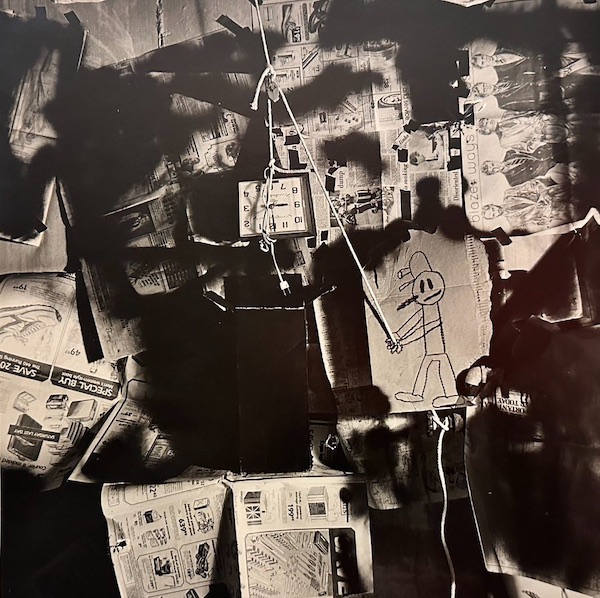
Barry Roth: Untitled Photograph, 1970s
BR: People still, like I said, reject me.
New Technology and Photography
CL: The Armory Show seemed like a small survey of the local avant-garde. We showed the scanner work, collage and some sculpture. And you were doing this stuff even 20–25 years before that—when you started using scans in Nightcrawlerz. What gave you that idea, of using the scanner as a camera? Nobody was doing that in the early 1980s.
BR: I guess I’m experimental, so I tried it. And it worked.
CL: It seemed so logical—a technique sitting in front of everyone’s nose. Suddenly, you were making fantastic prints that were very detailed and surreal. At that time, in the ’80s, you were playing a lot with technology.
BR: I worked with Unicolor, Yashica, and Olympus. I was with Olympus for twenty years. And they gave me a case of paper to test things with. When that ran out they’d send me another case. It was endless. Now, I do stuff on my phone all the time.
CL: Part of the Nightcrawlerz thing was how we’d communicate to each other through these new technologies—by Xeroxing, faxing, internet book making or scanning. The roots really began with Mail Art but quickly moved into the nascent internet. You were sending electronic images and texts through toys or simple early computer programs and running your poetry through it. You would just consume the technology and make it your own thing—turning it into an expressive device.
BR: Right. I have no problem with that. I don’t worry about it—or what these people think—because I could tell, people just don’t get it.
CL: What also started fairly early was our zine making—taking all these various techniques and cutting into and mashing the words and images together. Sometimes we followed themes: Who Killed Jim? and Ponch: a Play. Our method was about opening up and exposing the process. We laid things out so you could see the outlines. They were like seeing the raw sketchbooks. Nothing was ever completed.
BR: I had two things going on. I had my own work. Then I had the work I did with Nightcrawlerz. And Nightcrawlerz was more experimental and loose for me. But there were things we would do, things that I would learn from Nightcrawlerz. And then I could apply it to my own work. This was a really loose, fun, and exciting time.
CL: The scanner reminded me of the first time I started making collages on a Xerox machine in the ’70s, but the scans had much better clarity and resolution—and they could even be more glitchy with movement and the way light was reflected.
BR: That’s what got me going first, too. When I started at Cranbrook, they had a color Xerox machine. The thing I liked most was making multiples. With the scanner, you had the ability to look at them right away. And then you could change it right on the fly. The black-and-white photos were very laborious and slow. You had to set up chemicals, and that’s what I did in my apartment. The whole process was set up there so I could do it myself, right on the spot.
CL: That was when you were living on Whitmore in Palmer Park and doing the tabletop photos.
BR: Apartment A8, that building is boarded up now. You could die there. But I didn’t want to die there. A guy got shot in front of my building. And I was outside, saw him on the ground bleeding. And I called Lou Katz and said, “I’m moving into your house.” And I got out.
CL: So that was the same time sculptures began to enter your work? And you blended them into your photos. They became a document of the objects you were making.
BR: I was doing that in my apartment on Whitmore. I was lucky being young. And the stuff just came together for me and I said, “Oh, this is what it is.” And it just took off from that point. The whole theory of what I was doing was to create an object, a sculpture and then reproduce it. I’d ask myself, “What would that look like photographed?” Sometimes it looks like nothing. It was just stupid, but other times it would look cool. Other times I couldn’t get it into a picture. It was really through the tabletop stuff that I started to make constructions.
CL: Did you know Gordy or the Cass Corridor artists then?
BR: No. I didn’t really know Gordy. I knew his name but didn’t really know him until I met him through you and I was 50.
CL: What was it like at Cranbrook and studying with Carl Toth?
BR: Things started to take off when I met Carl, and through Carl, Robert Creeley came to Cranbrook. Carl had a great fix on history—he liked Atget, Moholy-Nagy and also William Carlos Williams and Creeley. He introduced us to artists from the Bauhaus—and the Black Mountain school—an extension of the Bauhaus, after they were kicked out of Germany by Hitler.
CL: And Charles Olson taught at Black Mountain too. He was an important influence and teacher-poet figure for the Artists’ Workshop in Detroit. Creeley visited the Artists’ Workshop—and met with its members and supported the Red Door Gallery. He really connected through generations of artists. He helped unite the community and was a big supporter of the regional art scene. Keeping it local was his motto and a message that still carries weight today.
BR: You and I were into him—we read the Creeley/Olson letters. That was a huge influence for me and changed my thinking of it.
Poetry, Sound, and Collage
BR: I remember Creeley talking about his process and how he goes about making a poem. And when I read that, I really related to it and felt like that’s what I’m doing—I was doing the same thing. It was very encouraging for me. I felt like I was on the right track. Here’s this big guy and we’re doing the same thing. Everything he said, I related to. It made me feel like I needed to keep going. That was a big deal for me, and maybe it happened a few years before I could really understand it.
CL: I remember reading interviews with Creeley, and he would talk about jazz and music and how that entered his poetry. It affected his word choice, and the rhythms of the line and how he chose to speak. Those inflections in his readings were bouncing off the music he was taking in, and that was something he brought to Charles Olson. The jazz became the poem.
BR: I like Miles Davis. He’s simple. There’s that stripping down.
CL: I saw an interview with John McLaughlin. They were in the studio recording In a Silent Way, and John said he couldn’t figure out what Miles wanted him to play during the session. He told Miles it was too difficult to play all the chords. He couldn’t follow it. Miles said, “Is that so?” And then he said, “Just play it like you don’t know how to play the guitar.” That’s when John came up with that droning intro in E. He figured it was the first thing you learned when you play guitar. That seems like what we were doing. Learning to forget what we knew. Returning to some root level of understanding. We were trying to locate a foundation, like when you heard that guy say aloud, “Lay da block.” That became a riff and a poem that we began to work out. Lots of those riffs were taken from the street.
BR: It was just stuff that was happening for us.
CL: I remember when Earl started to hang out with us and his world became a “routine” we would riff on. That reminded me of a William Burroughs thing, and those evolved into skits or worked into poems. And you would run with it in one direction, and I’d follow it into something else.
BR: Something would pop out for me, and I would build on that.
CL: It was similar to performing music—and playing with a riff. It’s like when you got those micro recorders from Olympus with those tiny cassettes. They were like early tape loops or samplers we could layer, to thicken up the soup. Also, those life-sized photo props you made in Lou’s basement out of cardboard, rope, paint, and newspapers—they helped turn your experiments into theater. They were so fantasy-like, but still stripped down and bare. The basement became a Nightcrawlerz fortress.
CL: How do you think our work ended up with the soundscapes?
BR: I liked it because it was working with my ideas of poetry and the collage idea. And the collage idea touches on sculpture and then at another level it was like creating new forms, new combinations. At times when I listen to it—it becomes startling—the sound feels different and uncanny.
CL: You had a playful approach to the sound, the sampling we did, the faxes, and the awful records we used as backgrounds. All of it was layered and collage.
BR: That’s still one of my main things. And I still use some of those poems in the pictures I do today and combine them and cut them with different elements.
CL: It was very fluid, the use of the image, words, and sound. It came together as one thing. I don’t know how the sound worked into the imagery, but maybe through thinking about it. Poetry would blend into sound and provided a field where it all could exist together.
BR: Well, the combinations, when I listen to it, suggested poetry in different ways. And from that, I may make a photograph. Maybe it’s my interpretation and not too obvious. Somehow, it gives me a compelling feeling that I need to follow—and I know that’s the next thing I need to do with it. Every once in a while, somebody writes me and they’ve listened to our music. And they’re going, “Wow. Yeah. This is wild.”
Exhibitions and Archives
CL: What was the Susanne Hilberry show like—how did that come about?
BR: That was just after I had leukemia, so it was probably 2012, about 10 years ago. Gordy suggested me to Susanne, who wanted to have another person at the show. Susanne called me up and said, “I represent Gordy Newton and he wants to have you in his show, but I don’t know you, I don’t know what your work looks like. Do you mind if I come over?” And I said, “Sure, come by,” and she brought her assistant Hazel, and she loved me. She was so perceptive and looked through all my different things and I couldn’t believe it. I thought she was going to be this snooty person, but she wasn’t. I’d go to her gallery during the off hours and we’d talk. I remember she had a show with Lynn Goldsmith, with her photographs of Patti Smith. And she wanted me to walk through the show with her and tell her what I thought each photo was about. I think she had a hard time with photographs, so I helped her with it.
CL: Cay’s contributions in the Armory show were gritty and streetwise—a similar style connected to what we think of as Cass Corridor. Gordy was trying to get away from that—to break new ground. He wanted to go for a more refined, condensed style. He made those elegant Plexiglas covers for his work. Even the black drawings were kind of slick and pure. As you and Gordy got more distilled, Cay and I became more complex and chaotic. It all had a futuristic tone, especially Rauhauser’s work, which cast the exhibit as dystopian and constructivist. It was a real odd-couple show. I’m glad you put together the book to document it.
BR: One copy is at Cranbrook and another is in the archives at Wayne State.
CL: It was an important thing to have documented, and I’m glad you wanted to do the book. Another thing I liked in the show were your scanned images of photographic objects, like developer trays—how you play with those forms or objects that photographers handle and that become transformed into something else. To me, they were like relics or ritual objects that you framed and pointed out. They also echoed back to the performance art you did ten or twenty years earlier—the Kabbalah “rooster tray” and other images you continued to riff on. You have a long history of working on these recurring forms.
BR: Sometimes I put images up on Instagram and people go, “Wow, new direction!” And I go, this was from ten or twenty years ago. I’ve been doing this for over fifty years but I’m glad I never stopped. That was important.
A Nightcrawlerz Scrapbook
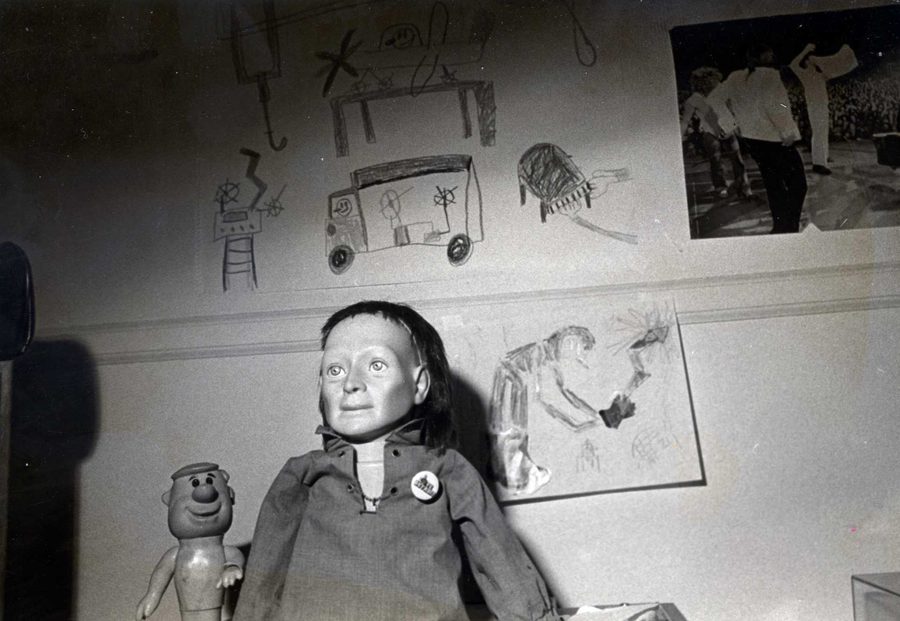
Barry Roth: Barney and Hugo, 1970s
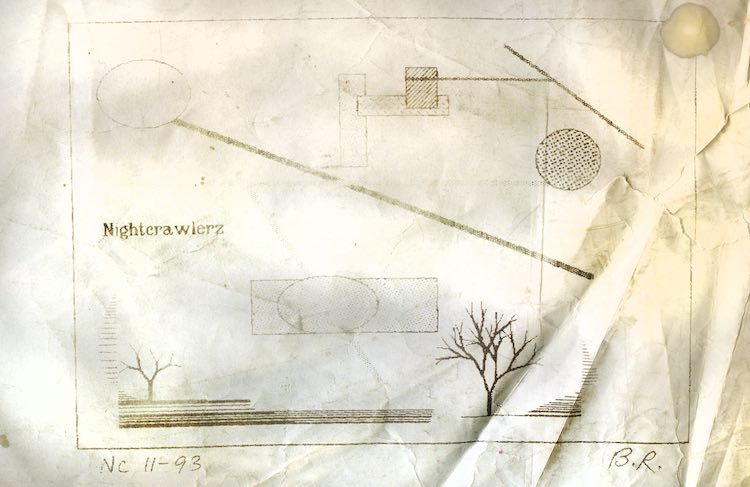
Barry Roth: Nightcrawlerz fax, toy program, “Rooster Tray” variation, 1993
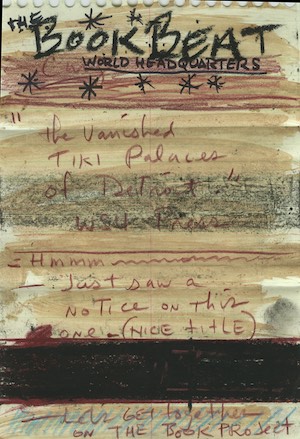
Gordon Newton, letter to Book Beat, 2007
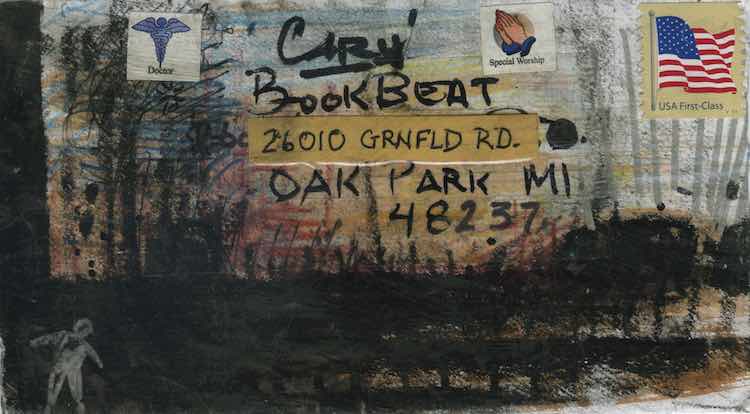
Gordon Newton: Letter to Book Beat envelope, 2007
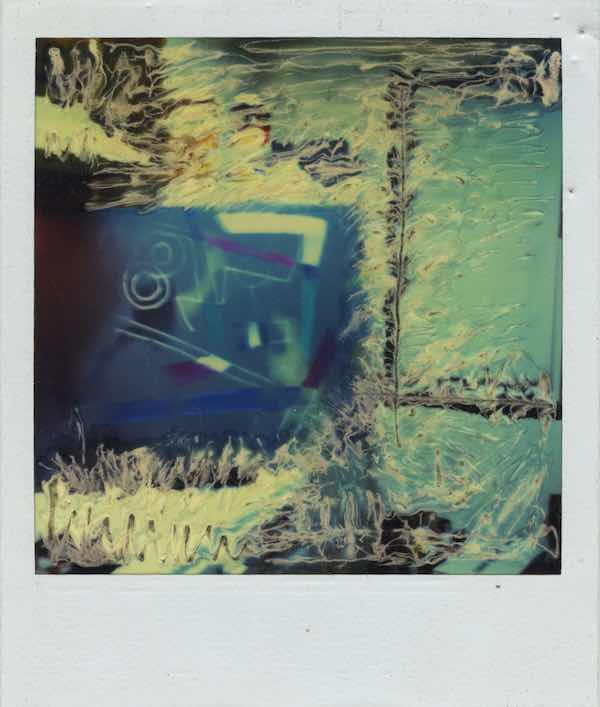
Nightcrawlerz: Manipulated Polaroid, 1981