
Celebratory Jewish Cuisine by Nancy J. Rodwan
The Jewish Holiday Table: A World of Recipes, Traditions & Stories to Celebrate All Year Long
by Naama Shefi & The Jewish Food Society
Hardcover, $36.00
15% off in store during the month of December!
Naama Shefi launched The Jewish Food Society in 2017 as a means to preserve and celebrate Jewish cookery from around the globe. “Since I created JFS, I’ve seen how food can enable those who identify as Jewish to feel proud of their roots and find a place for themselves within the community. And for those who are not Jewish, it can make them feel welcome to our table,” Shefi states in her preface to The Jewish Holiday Table.
The book contains 135 wonderful holiday recipes from 30 contributors from around the world. “There are countless definitions and visions of Jewish food – it’s not a static thing; it’s always evolving,” Shefi notes. “At its core, it lives at the intersection of Jewish rituals and holidays, kosher laws, and the food traditions and ingredients that cooks have encountered in a Diaspora that started more than two thousand years ago.”
In addition to the recipes, each contributor has provided family photos and very touching stories of their families’ journeys, which have often influenced the evolution of the dishes when traditional ingredients were not available in their new environments. The family stories are engaging and enrich each chapter.
The recipes I made:
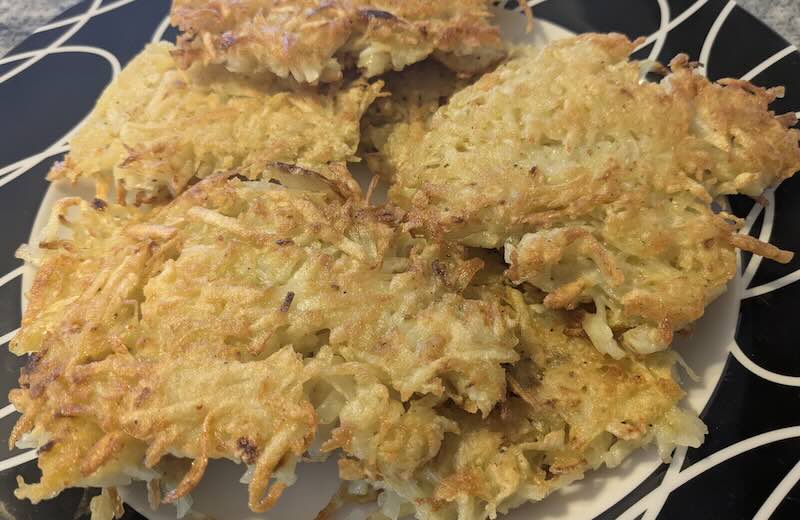
Lorenza Pintar’s Latkes with Stracchino (page 136)
These latkes are absolutely perfect in every way. Beautifully crunchy exterior with a buttery texture inside. She instructs you to put the grated potatoes and onion in a dish towel and squeeze the liquid out into a bowl. After five minutes you pour off the water and scrape the leftover starch into the bowl with the other ingredients. This technique is new to me and I believe it is a main contributor to the quality of the latkes. I did not use the stracchino cheese but served latkes with sour cream. Pintar serves these on Hanukkah. Family journey: Milan to Brooklyn, NY.
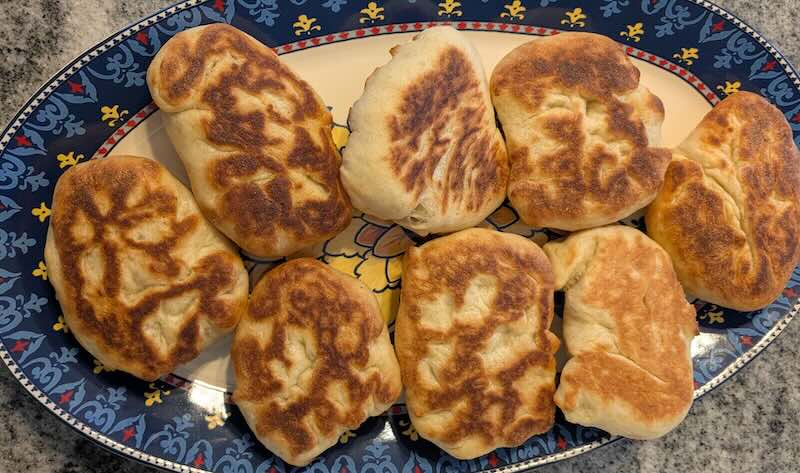
Erez Pinhas’s Salouf, Yemenite Flatbread (page 95)
The flatbreads are a real delight. The crisp crust encloses a delicate, tender bread that can be paired with anything. We ate it for dinner along with almoronía (see below) and in the morning slathered it with butter and honey for a sensational breakfast. You bake the salouf in a very hot oven individually for three minutes per side. I highly recommend having a baking partner with one of you removing the cooked bread while the other drops the oiled dough on the piping hot pan in the oven. You need to do this quickly so the oven temperature does not drop between batches. Pinhas serves salouf on Yom Kippur. Family journey: Rejam & Taiz, Yemen to Tel Aviv to Yoken’am & Rehovot, Israel to Tel Aviv.
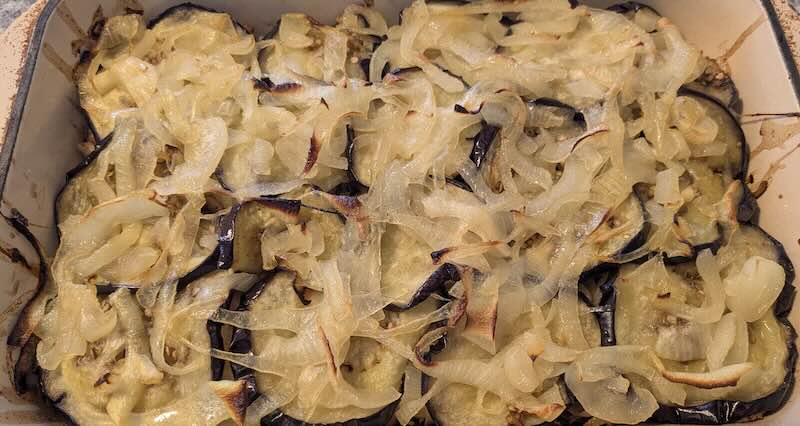
Esther Serruya Weyl’s Almoronía, Baked Chicken with Eggplant and Onions (page 378)
The combination of flavors in this dish is ethereal. It involves layers of eggplant, roasted chicken coated in cumin, nutmeg and cinnamon, and sautéed onions glazed with honey. The recipe calls for frying the eggplant but I prefer to lightly coat it with olive oil and roast it in my toaster oven. When my garden is once again producing plenty of eggplant I will definitely return to this recipe. Weyl instructs you to roast chicken thighs for the dish but I can see using leftovers or a rotisserie chicken as a time saver. Weyl serves almoronía on Shabbat. Family journey: Spain to Morocco to Belem, Brazil.
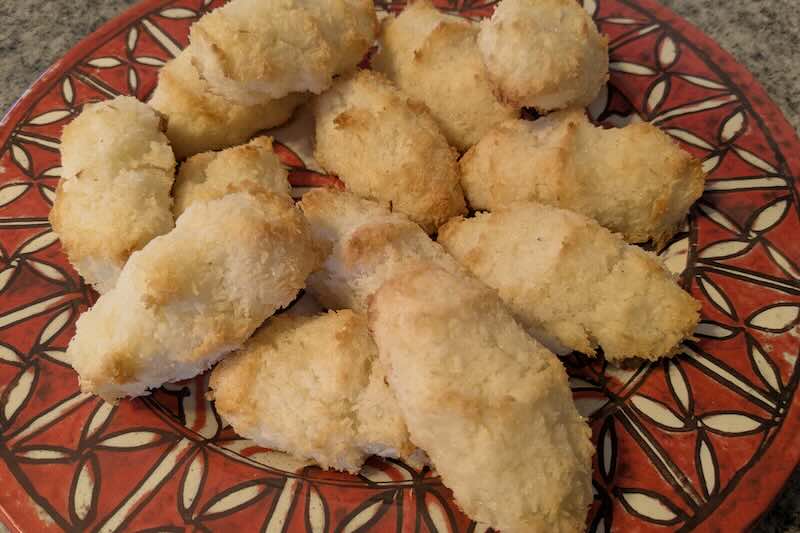
Ilana Isaac’s Coconut Cookies (page 198)
The recipe is very simple, wonderfully delicious and quick to make. The cookies are both crunchy and chewy. Since there is no flour involved in the cookies, they are perfect for Passover. Isaac serves the coconut cookies for Purim. Family journey: Baghdad to Akko, Israel to Tel Aviv.
Nearly all of the recipes in the book are kosher and the contributors are all part of the Jewish Food Society. The book is a celebration of the cooks, their traditions, lives and holidays. “Each holiday offers us an opportunity to find personal meaning in an ancient tradition that’s always evolving,” Shefi writes. “And at their core is time to spend around a table with the people we love the most.”
In full disclosure, I am not Jewish, but I will always treasure this book that is so much more than a cookbook. I learned a great deal about Jewish history, culture, traditions and culinary heritage from reading the family stories.
Nancy J. Rodwan is an artist, writer, and owner of Rodwan Permissions, with over 16 years of experience in intellectual property rights clearance, specializing in print, electronic, music, and film rights. She works parttime at Book Beat, writes for the Book Beat Journal and was a featured artist in this issue of the Detroit art journal Essay’d.