
In this new series of reviews Tom Bowden covers a history of French lit in eight reviews. Most are stocked in store. Links are to our affiliate page on Bookshop.org.
TWO CENTURIES OF FRENCH LITERATURE
Old Goriot
Honoré de Balzac / Marion Ayton Crawford
Penguin Classics
The Fortune of the Rougons
Émile Zola / Brian Nelson
Oxford World’s Classics
Swann’s Way
Marcel Proust / James Grieve
NYRB Classics
The Pure and the Impure
Colette / Herma Briffault
NYRB Classics
War
Louis-Ferdinand Céline / Charlotte Mandell
New Directions
Me & Other Writing
Marguerite Duras / Olivia Baes & Emma Ramadan
Dorothy Project
Getting Lost
Annie Ernaux / Alison L. Strayer
7 Stories Press
Baise-Moi
Virginie Despentes / Bruce Benderson
Grove Press
Introduction
These eight works, written between 1835 and 1993, cover nearly two centuries of upheaval in French culture and politics: monarchy to republic, war to liberation, modernism to postmodern disillusion.
In Balzac and Zola, social hierarchy scaffolds every human transaction. Proust and Colette are defined by their exploration of memory, perception, and pleasure. The war Céline witnessed shook the foundations of empathy, which Duras treated with silence and Ernaux into clinical self-scrutiny. Despentes documents the end of the social contract itself. Emerging from these readings is not a steady cultural progression toward liberation and expanded civil rights, but a continuous re-negotiation of what survival, dignity, and love might mean in a culture that so often defines women by their usefulness or restraint.
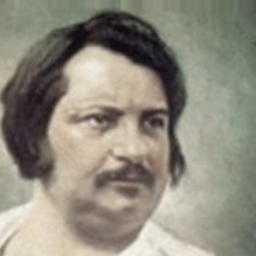 Honoré de Balzac, Old Goriot (1835)
Balzac’s Old Goriot is a study of Parisian ambition. The novel unfolds almost entirely within a decaying boardinghouse run by Madame Vauquer, whose tenants represent the strata of a restless society: students, clerks, and pensioners, each scheming for ascent or survival. Among them is Goriot, a former vermicelli manufacturer who has impoverished himself for his two daughters, Delphine and Anastasie, both married to noblemen, who now treat him as a disgrace. To the house comes Eugène de Rastignac, a law student from the provinces, eager to gain entrée into aristocratic circles. Under the cynical mentorship of Vautrin—a criminal posing as a dandy—Rastignac learns that success in Paris requires a strategic amputation of conscience.
Balzac’s Paris is not merely a backdrop but an organism: voracious, amoral, and perfectly logical in its cruelty. Every virtue is either commodified or punished. Rastignac’s education consists less in law than in hypocrisy, as he discovers that affection and money are interchangeable currencies. Goriot, meanwhile, is consumed by paternal devotion; his tragedy lies in loving a world that prefers the bonds capital over the bonds of love. When he dies, abandoned by his daughters, the young student stands over his grave and vows to conquer the city that killed the old man. The declaration marks the triumph of ambition over empathy—and inaugurates the cynicism that permeates the French literature to come.
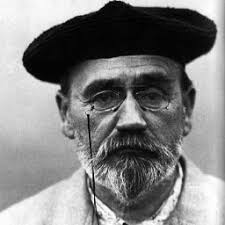 Émile Zola, The Fortune of the Rougons (1871)
What Balzac mapped through social psychology, Zola dissected through biology. The Fortune of the Rougons, the opening volume of his twenty-book cycle, unfolds in the fictional town of Plassans during Louis-Napoleon’s coup d’état. The novel traces two intertwined branches of the same family: the legitimate Rougons, grasping bourgeois loyalists, and the illegitimate Macquarts, volatile laborers driven by resentment. At its center are Pierre and Félicité Rougon, who use the chaos of revolution to secure wealth and respectability. Around them swirl characters whose fates embody Zola’s theory of heredity—the belief that bloodlines and circumstance determine behavior as inexorably as chemistry.
The novel’s women act from within constrained roles but display sharper instincts than the men who control them. Félicité manipulates political alliances with pragmatic coldness, while young Miette, the peasant girl who joins the doomed Republican uprising, brings to the barricades a tragic purity of purpose. Zola’s naturalism transforms sentiment into data; compassion yields to observation. Yet even within his deterministic framework, flashes of tenderness persist—moments when human desire briefly outruns its genetic script. The novel’s juxtaposition—Pierre’s political triumph against Miette’s death in the mud—suggests the moral cost of progress.
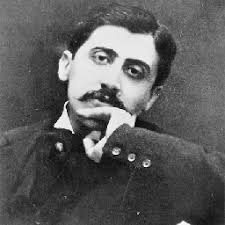 Marcel Proust, Swann’s Way (1913)
Proust replaces Zola’s social determinism with an inward determinism of the senses. In Swann’s Way, the book’s central figure, Charles Swann, lives a life of cultivated taste and social privilege, yet he is undone by his infatuation with Odette de Crécy, a woman of limited intellect and dubious background. His love, obsessive and analytic, becomes an experiment in self-deception. He sees Odette not as she is but as he needs her to be, transforming desire into aesthetic performance.
Proust demonstrates that consciousness itself is narrative—the rearrangement of time through memory. The women in his world exist both as individuals and as projections of male perception. Odette is never entirely real to Swann; she is a canvas on which he paints the drama of his own longing. Swann’s tragedy is to misread love according to his assumptions and expectations, which poorly align with the quality of his actual, lived experiences.
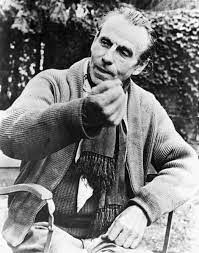 Louis-Ferdinand Céline, War (1917/18)
Céline’s War razes the last vestiges of 19th-century decorum. Found among the author’s recovered manuscripts, it presents the First World War not as history but as hallucination. The narrator, Ferdinand, wakes wounded and half-insane in a military hospital. Around him swirl nurses, orderlies, prostitutes, and bureaucrats, all rendered in slang-ridden prose that collapses heroism into grotesque comedy. The war’s horror is in its noise, literal and figurative—”I caught the war in my head,” the narrator says, “and it’s still there.”
The women of War occupy the blurred line between care and exploitation. The nurse who masturbates the wounded soldiers at night offers comfort and degradation in the same gesture; compassion is indistinguishable from survival. Céline’s vision is devoid of sentiment but not of pity. He grants his characters no redemption, only endurance. Where Balzac chronicled society’s rise, Céline chronicles its collapse into absurdity. His moral universe is stripped bare: nothing remains but the body’s stubborn will to persist.
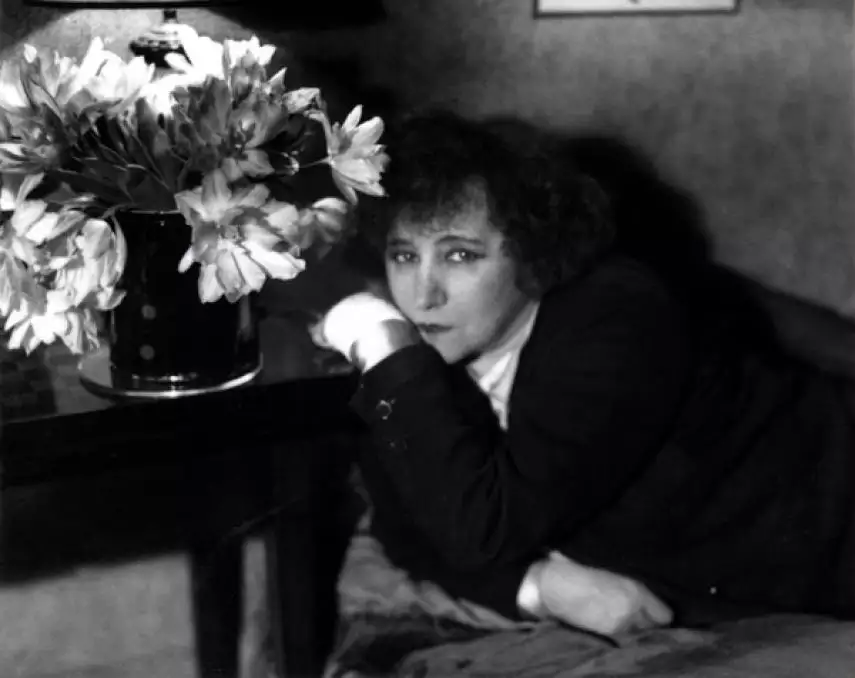
André Kertész
Colette, Paris, 1930
Colette, The Pure and the Impure (1932/43)
In Colette’s The Pure and the Impure, sensual life becomes a form of philosophy. The book, written in fragments of conversation and observation, captures the demi-monde of Paris between the wars—courtesans, lesbians, and dandies who have made art from the management of desire. Colette’s narrator, often presumed to be herself, moves among them as both participant and witness, documenting how people perform passion as if it were theater. Her prose glows with tactile precision: fabrics, perfumes, gestures. In this world, love is a discipline of attention rather than a moral category.
Colette’s women are neither victims nor saints; they are strategists of experience. The aging courtesan Charlotte fakes orgasm out of kindness to a young lover, and the narrator treats the gesture not as deceit but as generosity. Female couples find in each other a fragile refuge from male authority, though Colette insists that even these unions are shadowed by jealousy and social peril. Her tone is worldly but elegiac—liberation carries its own exhaustion. If Balzac saw women negotiating power within hierarchy, Colette sees them negotiating power within intimacy. Purity, for her, lies not in abstinence but in clarity about one’s own appetites.
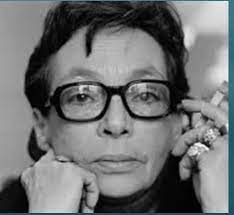 Marguerite Duras, Me & Other Writing (1976-1980)
Duras’s essays and fragments, collected in Me & Other Writing, read like private notebooks addressed to the public. Her voice is both confessional and oracular, alternating between intimacy and abstraction. She writes about film, writing, and solitude, but her true subject is the tension between speech and silence. In these texts, Duras explores how language both conceals and reveals desire. Her syntax—short, recursive, incantatory—turns thought into rhythm.
The women who populate Duras’s prose are both self-aware and lost, caught between independence and yearning. She writes of lucidity: the moment when one sees love’s machinery at work and still cannot escape it. In her essays about murder trials, child-adult relationships, or the politics of writing, she refuses the consolations of moral certainty. Like Proust, she understands that memory is a creative act; unlike him, she strips the artifice to the bone. Duras transforms confession into critique, insisting on a female desire that is messy, insistent, and articulate.
 Annie Ernaux, Getting Lost (late 1980s; published in 2001)
Ernaux’s Getting Lost extends Duras’s candor and self-documentation. Drawn from diaries written during her affair with a younger, married Soviet diplomat, the book is both erotic record and anthropological study. Every entry catalogs the symptoms of obsession: the hours between phone calls, the precise choreography of longing. Her tone is analytical rather than sentimental. She watches herself desire, as if her body were an archive to be annotated.
Unlike earlier confessional writers, Ernaux refuses to romanticize suffering. Her affair becomes a means of examining class, gender, and history—the residue of postwar ideals about equality and passion. She notes that her lover idolizes Stalin even as he adores Western luxury, embodying the contradictions of late-20th-century politics. Ernaux’s prose, deceptively plain, turns emotion into evidence. The book’s title captures her project: to get lost as method, to dissolve the boundary between living and observing. If Balzac’s women were confined by social walls, Ernaux’s confinement is internal—an attachment she cannot reason away.
 Virginie Despentes, Baise-Moi (1993)
Despentes’s Baise-Moi (“Rape Me”) is written in the argot of the streets, telling of two women, Manu and Nadine, who, after rape and degradation, embark on a violent rampage across France. Their journey—drinking, stealing, killing—is a nihilistic inversion of the road novel. Despentes writes without euphemism or sentiment; her language is raw, often pornographic, deliberately abrasive. The novel refuses both moral justification and victimhood.
For all its provocation, Baise-Moi directly descends from the naturalist and existentialist traditions: Zola’s determinism stripped of its science and Sartre’s freedom stripped of its philosophy. Despentes describes a society that offers women few viable modes of achieving independence but instead offers only submission or revolt. Her protagonists choose revolt, and though it destroys them, their refusal to apologize feels like a final form of truth. The novel’s closing image—Nadine arrested after attempting suicide—reduces the French obsession with love and punishment to its starkest equation: survival without illusion.
Conclusion
Read together, these eight works each strip away a layer of pretense about what binds human beings—money, desire, memory, power. Balzac and Zola frame society as mechanism, Proust and Colette as consciousness, Céline as collapse, Duras and Ernaux as introspection, Despentes as explosion. Across this arc, women move from being mirrors of moral order to its most acute witnesses, their voices evolving from silence to rage.
The story these books tell is not that women became freer, but that French literature grew more honest about the costs of wanting freedom. What unites these writers is their faith that literature can still bear witness to the private negotiations behind public life.