
We have to create a folklore of the present and the future.
–Peter Laughner
Ain’t it Fun: Peter Laughner and Proto-Punk in the Secret City is Aaron Lange’s masterwork of graphic non-fiction, a 400+ page tapestry of regional angst and punk rock history published in 2022. The center vortex is not only Peter Laughner but the Terminal City itself. Cleveland never looked so raw, dangerous, bleak, sexy and exceptional. The book’s title was taken from Laughter’s infamous anti-hero anthem. In a review of the Laughner box set on Smog Veil records Motor City Journalist Mike Rubin wrote in the New York Times , “Laughner spent the final two years of his life working overtime to turn its refrain — “Ain’t it fun when you know you’re gonna die young” — into a self-fulfilling prophecy.”
Laughner, who died of self-abuse in 1977 at the apogee of punk rock’s evolution is a kind of exemplar of punk anarchy and experimentation, a Rimbaudian rebel who helped shape the movement. Lange exposes Laughner’s story frame-by-frame which morphs into many stories and sidebars branching into weird digressions and urban terror. Laughner’s lakeside hometown is revealed as the setting for the decades earlier “Torso murders” –serial killings that brought in Eliot Ness from the Chicago F.B.I., whose autobiography became the successful television serial The Untouchables. The “Torso murders” are just one of multiple storylines that cross paths with Laughner.
Lange throws a large net of narratives out with differing view points building tension and highlights Cleveland as a kind of twilight zone of creative and wayward endeavors; “The Mistake on the Lake” was home to a fair share of weirdness and by digging deeply into the city’s history, Lange slowly unearths the bizarre connective tissue along with the Monster that Devoured Cleveland.
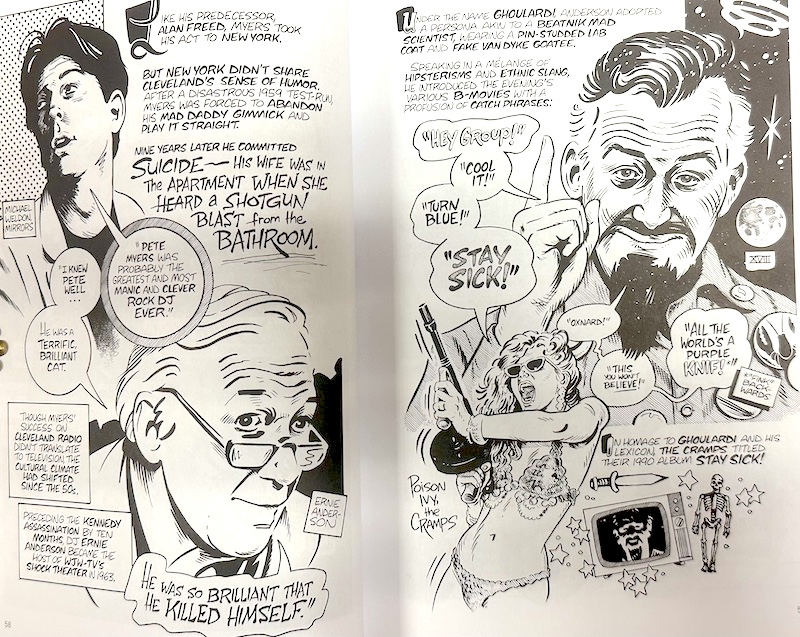
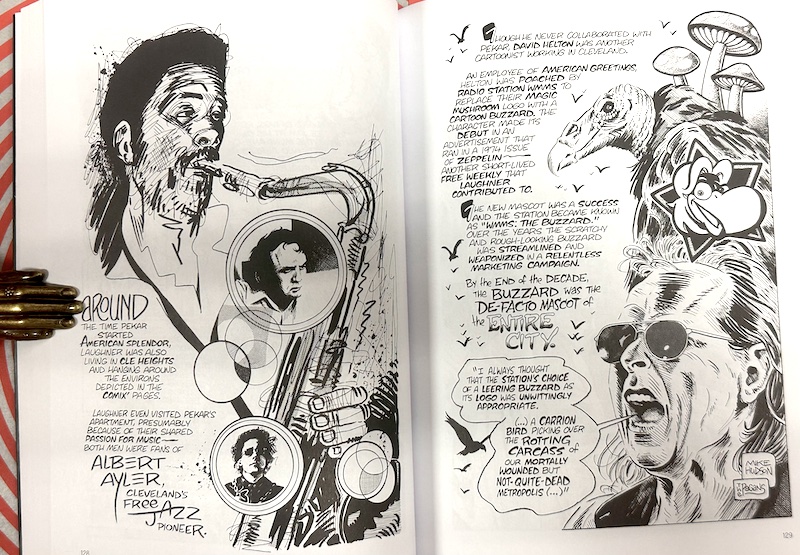
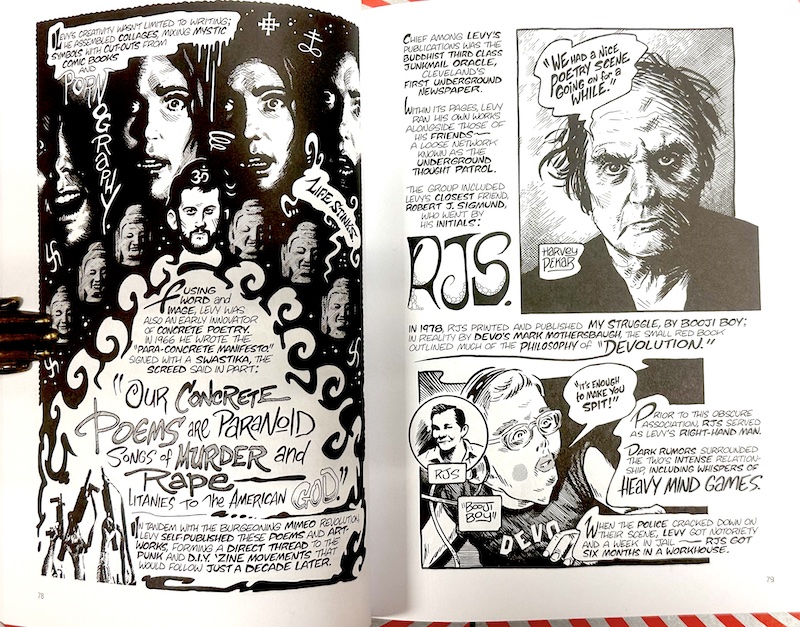
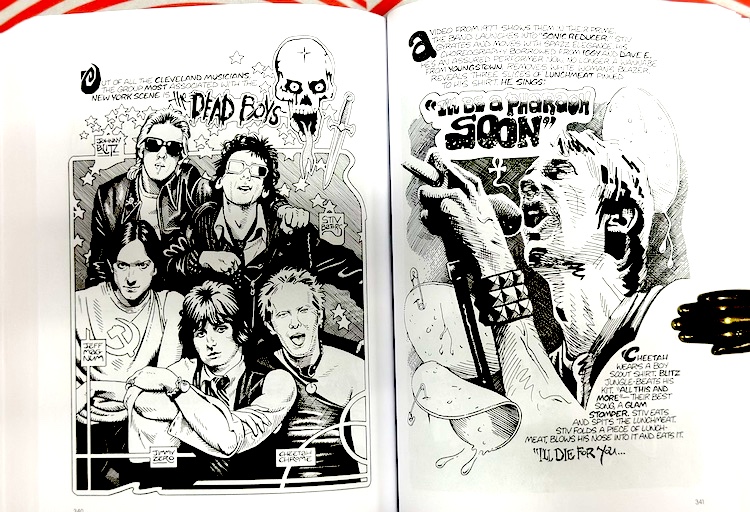
The pathways of visionary poet/artist d.a. levy, R.Crumb, Harvey Pekar, DJ Mad Daddy and Alan Freed are other vignettes tied to the underground music scene that feature Laughner, David Thomas, the Velvet Underground, Albert Ayler, Cheetah Crome, Stiv Bators, Chrisse Hynde, Mark Mothersbaugh, Devo and Drome records. The paranoia and repression d.a. levy felt about Cleveland is another spot of gloom that penetrates Ain’t It Fun.
Some of the music highlights include Rick Derringer and The McCoy’s whose #1 1965 billboard hit Hang on Sloopy (Ohio’s state song), are explored with local top forty bands; The Raspberries, The James Gang, and Pat Banatar who were in heavy rotation during the time of the Kent State Shootings. Not only did that incident inspire Neil Young’s eulogy “Ohio” a week later, but guitar genius Joe Walsh who attended Kent State wrote “Turn to Stone” also based on the shootings. In “What it Means Now” a Rolling Stone interview on the 50th anniversary of Kent State, Walsh compares that time to today:
It was a long time ago but the reason it is so important and should be remembered is because history repeats itself — and we are as divided as a country now as we were then — and people demonstrating have no chance against people with guns. The solution then, as it is now, is to be able to peacefully assemble and understand each other and accept our differences, without fear, without hatred, without violence.
Laughner was a member of Rocket From the Tombs and also founded Pere Ubu with David Thomas. Pere Ubu’s first single 30 Seconds Over Tokyo of 1975, was an early example of industrial noise, a radical departure in rock music.
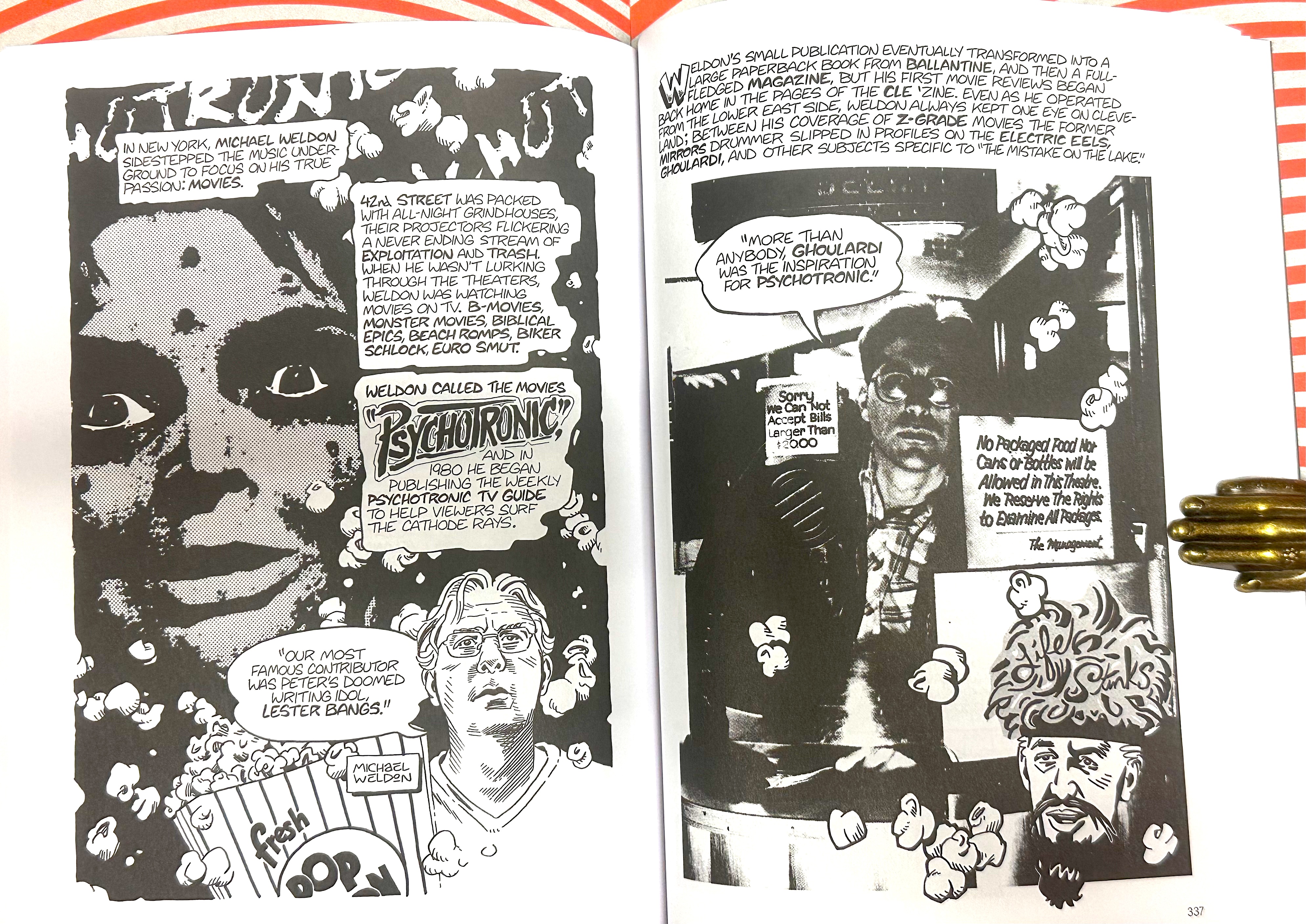
Lange’s research reveals a swamp of political and cultural mystery and by tying the threads together Cleveland becomes the backbone for a story utterly dystopian and Pynchonesque. Michael Weldon drummer for the VU influenced band The Mirrors was another guardian of Cleveland culture and his Psychotronic Video zine, influenced by Ernie Anderson/Ghoulardi and Ron Sweed/ the Ghoul, grade Z TV horror-hosts is another thread and conspiratorial note covered in Ain’t It Fun.
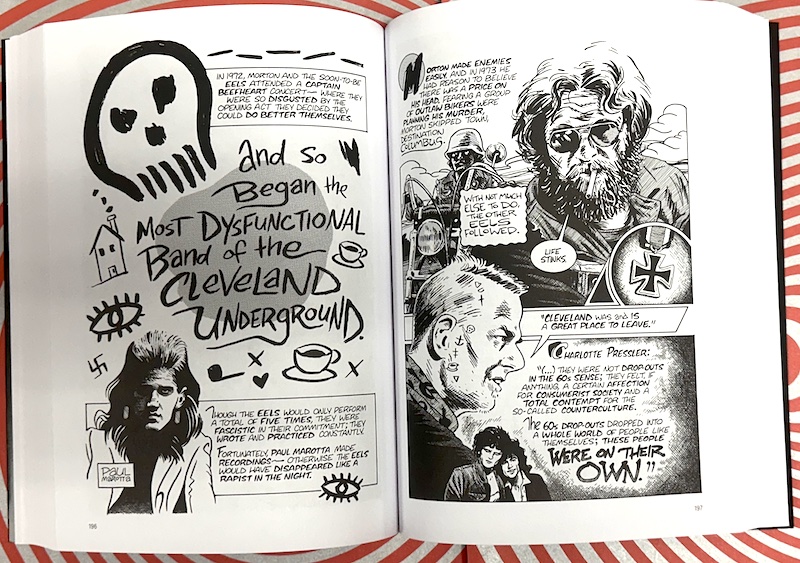
The overlooked contributions of John Morton and the electric eels are also woven into the book where Morton’s raw nerves and calligraphic tattoos become another coded subplot.
“Life Stinks!” is a recurring shout of outrage that pops up like Kurt Vonnegut’s existential “so it goes,” marking a connective pause in opening scenes. From an interview in the Cleveland Review of Books, Lange spoke on the politics of the era:
I don’t think there was any particular ideology, and in the case of the electric eels it was just pure nihilism. I think Peter was just specifically opposed to the stifling conformity of his post-war suburban childhood, and just an all-around champion of creativity and personal freedom. As far as I know, the most concrete manifestation of this outlook was his early championing of gay rights, which was not a common thing for his time and place. Peter deserves credit for that.
The final section of the book is enhanced with author notes titled “Datapanik” where Lange explains more background to the entries, revealing sources from personal letters, interviews, books, recordings and articles, leaving the reader with better insight and more to explore if he chooses. Despite the darkness surrounding it, Ain’t It Fun is an enjoyable read and visual journey into the heart of punk rock. Lange’s closeness and passion for the material is visible on each page, exposing the secret folklore to an era still shaping our world.
Signed copies of Ain’t It Fun are available in store or online at the Book Beat Gallery.